
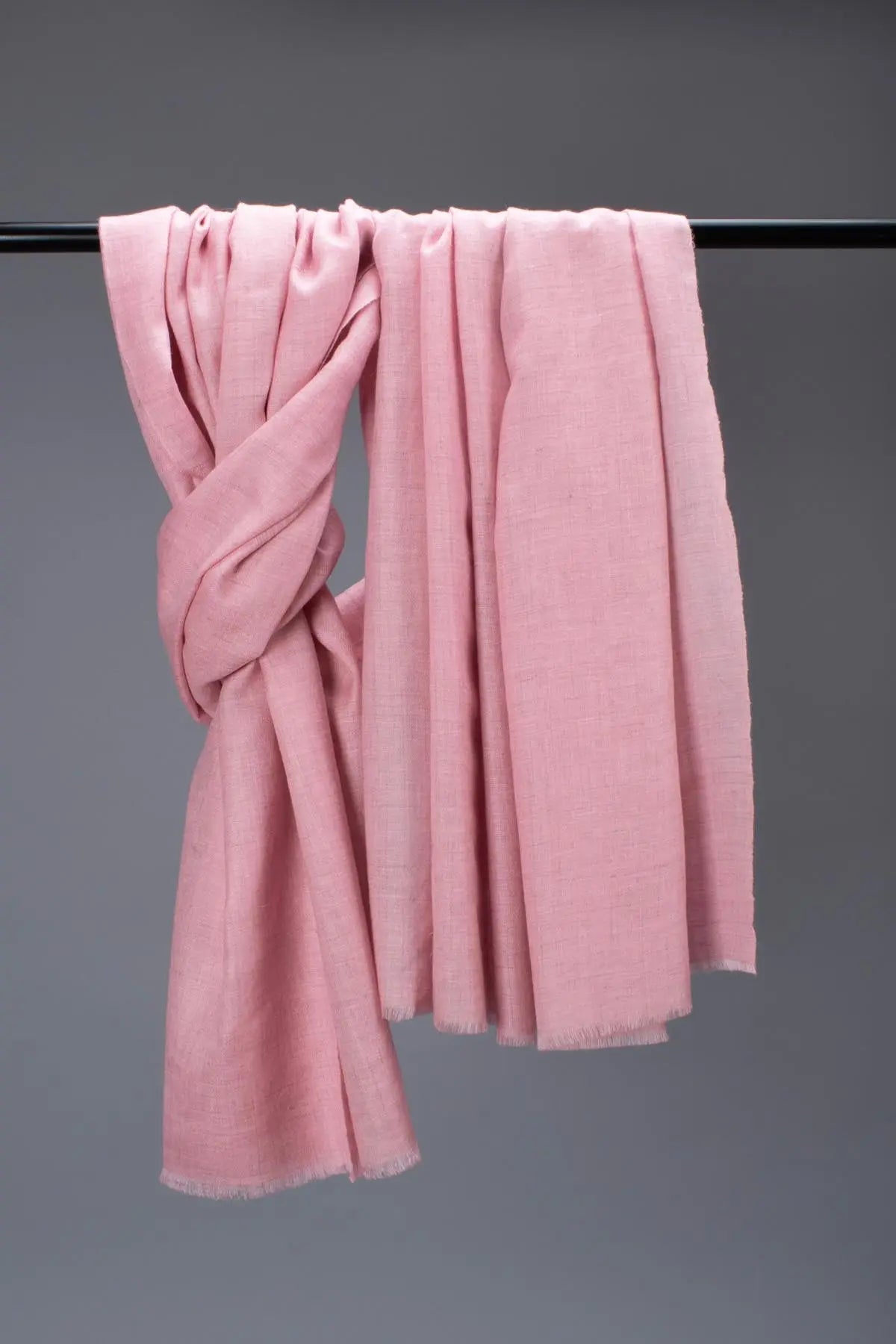
Artikel: What Does Pashmina Mean? Understanding the Meaning, Origin and Heritage of Pashmina

What Does Pashmina Mean? Understanding the Meaning, Origin and Heritage of Pashmina
Pashmina is one of the most celebrated luxury fibers in the world, known for its exceptional softness, warmth, and connection to the rich textile heritage of Kashmir. But what does Pashmina actually mean?
The word is often used interchangeably with cashmere, wool, and even shawls. Yet, Pashmina has a much deeper meaning rooted in the fibre, the Himalayan landscape, and centuries-old craftsmanship.
In this guide, we explore the meaning of Pashmina, where it comes from, how it became associated with Kashmir, and what makes authentic Pashmina so special.
What Does the Word Pashmina Mean?
The word Pashmina is derived from the Persian word “pashm,” meaning wool or fine wool. Over centuries, the term came to be associated particularly with the exceptionally fine undercoat fibre obtained from certain Himalayan goats.
In the context of traditional Kashmiri craftsmanship, Pashmina refers to this exceptionally fine fibre and the luxurious textiles made from it.
The fibre is valued for its remarkable fineness, softness, warmth, and lightweight character. Unlike ordinary wool, fine Pashmina fibres are extremely delicate, requiring specialized skills to spin, weave, and finish them.
Where Does Pashmina Come From?
Traditional Pashmina is associated with the Changthang region of Himalayas, a high altitude landscape where the indigenous Changthangi goat has adapted to extremely cold Himalayan conditions.
During the harsh winter months, these goats develop a fine, insulating undercoat beneath their coarser outer hair. This soft undercoat is naturally shed as temperatures rise and can be carefully collected and processed into fine fibre.
This is the starting point of authentic Pashmina.
The fibre then undergoes several traditional processes before becoming the luxurious textiles for which Kashmir is famous.
Why Is Pashmina Associated With Kashmir?
Although the raw Pashmina fiber originates in the high altitude Himalayan regions, Kashmir became one of the world's great centers for transforming this fiber into luxury textiles.
For centuries, Kashmiri artisans have developed highly specialized techniques for spinning, weaving, dyeing, and embroidering Pashmina.
The valley's textile tradition gave rise to extraordinary forms of craftsmanship, including:
-
Handspun Pashmina
-
Handwoven Pashmina
-
Kani weaving
-
Sozni embroidery
-
Tilla embroidery
-
Jamavar
-
Dorukha weaving
-
Traditional patterned shawls
This is why the word Pashmina is deeply connected with Kashmir's cultural and textile heritage.
Pashmina and Cashmere: Are They the Same?
Traditionally, Pashmina and Cashmere describe the same exceptionally fine natural fibre obtained from Himalayan goats, particularly the fine undercoat fibre associated with the Changthangi goat.
The difference is largely one of language, geography, tradition, and commercial usage.
Pashmina is the traditional term strongly associated with the Himalayan region and, particularly, the centuries old craft of Kashmir.
Cashmere became the internationally recognized name for the fiber, derived from Kashmir. As Kashmiri shawls became famous around the world, the name of the region became associated with the luxurious fiber itself.
Therefore, when you see a genuine Pashmina or genuine high quality Cashmere product, you are essentially looking at the same type of exceptionally fine luxury fiber, although the terminology and manufacturing traditions may differ.
What Makes Pashmina So Soft?
One of the defining characteristics of fine Pashmina is the fineness of its fibers.
Fine fibres create a softer sensation against the skin because there are fewer coarse fibre ends to cause irritation. At the same time, the natural structure of the fibre allows it to trap air, providing warmth without the heavy feeling associated with thicker wool.
This combination gives high-quality Pashmina its characteristic:
Softness + Warmth + Lightness
The experience becomes even more distinctive when the fibre is traditionally handspun and handwoven.
What Is Handspun Pashmina?
Handspun Pashmina is produced by spinning the fibre manually, traditionally using a wooden charkha.
Hand spinning is a slow and highly skilled process. Unlike highly uniform machine spun yarn, handspun yarn can retain subtle variations in thickness and texture.
These natural variations are part of the character of handmade Pashmina.
At Shahkaar, we value these characteristics because they reflect the human craftsmanship behind the textile rather than attempting to make every fibre mechanically identical.
From Fibre to a Pashmina Shawl
Creating a traditional Pashmina shawl involves considerably more than simply obtaining the raw fibre.
The journey can include:
Himalayan fibre → Cleaning → Carding → Spinning → Yarn preparation → Hand weaving → Dyeing → Embroidery/finishing
Each stage requires knowledge and craftsmanship.
A particularly fine embroidered shawl can take months of work, depending on its design, embroidery density, and weaving technique.
This is why a traditional Pashmina shawl represents not only a material but also the work of multiple skilled artisans.
Why Is Pashmina Considered a Luxury Fibre?
Pashmina's luxury comes from a combination of factors rather than softness alone.
1. Fine Natural Fibre
The exceptionally fine fibre provides a soft and lightweight textile.
2. Limited Raw Material
The fine undercoat fibre is naturally limited and is obtained from goats living in demanding Himalayan environments.
3. Skilled Craftsmanship
Traditional spinning and weaving require considerable time and expertise.
4. Handwork
Traditional Kashmiri embroidery such as Sozni can involve extensive manual work.
5. Heritage
Pashmina carries centuries of Himalayan and Kashmiri textile history.
Luxury Pashmina is therefore the result of fibre + craftsmanship + time + heritage.
Is Every Soft Shawl Pashmina?
No.
Softness alone cannot establish whether a textile is authentic Pashmina.
Modern textiles can be manufactured from many different fibres, including fine wool, viscose, acrylic, polyester, and blends. Some may feel soft to the touch while having very different fibre compositions.
For customers purchasing high value Pashmina, it is therefore important to understand the fiber's origin and the product's documentation.
At Shahkaar, authenticity can be supported through options such as a Shahkaar Certificate of Authenticity, GI certification, and laboratory testing, depending on the piece and customer's requirements.
How to Identify Authentic Pashmina
There is no single home test that can reliably establish every aspect of authenticity.
Instead, consider several factors:
-
Ask about the fibre composition.
-
Understand where the fibre comes from.
-
Ask whether the product is handwoven or machine made.
-
Ask about the spinning method.
-
Look at the weave and finishing.
-
Consider the craftsmanship and provenance.
-
For valuable pieces, request appropriate documentation or laboratory testing.
A reputable seller should be able to explain how the product was made rather than relying solely on words such as “100% Pashmina” or “pure cashmere.”
Pashmina Is More Than a Fabric
Perhaps the most important thing to understand about Pashmina is that it is more than a material.
It represents a connection between the Himalayan goat, the natural fibre, the artisan, the loom, and the centuries old textile traditions of Kashmir.
Every handwoven Pashmina carries subtle characteristics that distinguish it from a mass produced textile. Small variations in texture, weave, or handmade finishing can be part of its identity.
For generations, Kashmiri artisans have transformed a delicate Himalayan fibre into textiles that have travelled across the world.
That tradition continues today.
Shahkaar: A Kashmiri Pashmina Heritage
At Shahkaar, we work to preserve the traditional craftsmanship associated with Kashmiri Pashmina while presenting it to a contemporary audience.
Our Pashmina pieces are created with an emphasis on authentic materials, traditional craftsmanship, and the skills of Kashmiri artisans.
From handwoven Pashmina to intricate Sozni embroidery and traditional weaving techniques, each piece represents the continuation of a craft that has been passed down through generations.
Final Thoughts
So, what does Pashmina mean?
At its simplest, Pashmina refers to an exceptionally fine Himalayan fibre and the luxurious textiles traditionally created from it.
But in Kashmir, Pashmina means much more.
It represents craftsmanship, heritage, patience, and the transformation of a rare Himalayan fibre into something enduring and beautiful.
When you purchase a genuine handcrafted Pashmina, you are not simply buying a soft shawl or scarf. You are experiencing a piece of Himalayan and Kashmiri textile heritage shaped by nature and finished by human hands.

Hinterlassen Sie einen Kommentar
Diese Website ist durch hCaptcha geschützt und es gelten die allgemeinen Geschäftsbedingungen und Datenschutzbestimmungen von hCaptcha.